LTI tool settings explained
A reference for every setting of an LTI tool, with the name it has when you create the tool and when you edit it.
You set most of these when you create the tool and you can change all of them later in the advanced settings of the tool. The two forms use slightly different names for the same settings. This page follows the order of the settings form and mentions the name on the create form where it differs.
Basic settings

| Setting | What it does |
|---|---|
| LTI version | LTI 1.3 (Advantage) or LTI 1.1/2.0 (Legacy). Legacy works with almost every LMS and only needs a launch URL and a secret. Advantage is the current standard with grade services and deep linking, and requires the LMS to be registered as a platform in Linqur. You can switch at any time. |
| Tool name | The name of the tool in your overview. Your client doesn’t see it. |
| Learning object | What the tool publishes: Course for the complete course as a learning path, or one activity, such as a SCORM package. On the create form this is the choice between Individual Activity and Complete Course. |
Enrolment period

| Setting | What it does |
|---|---|
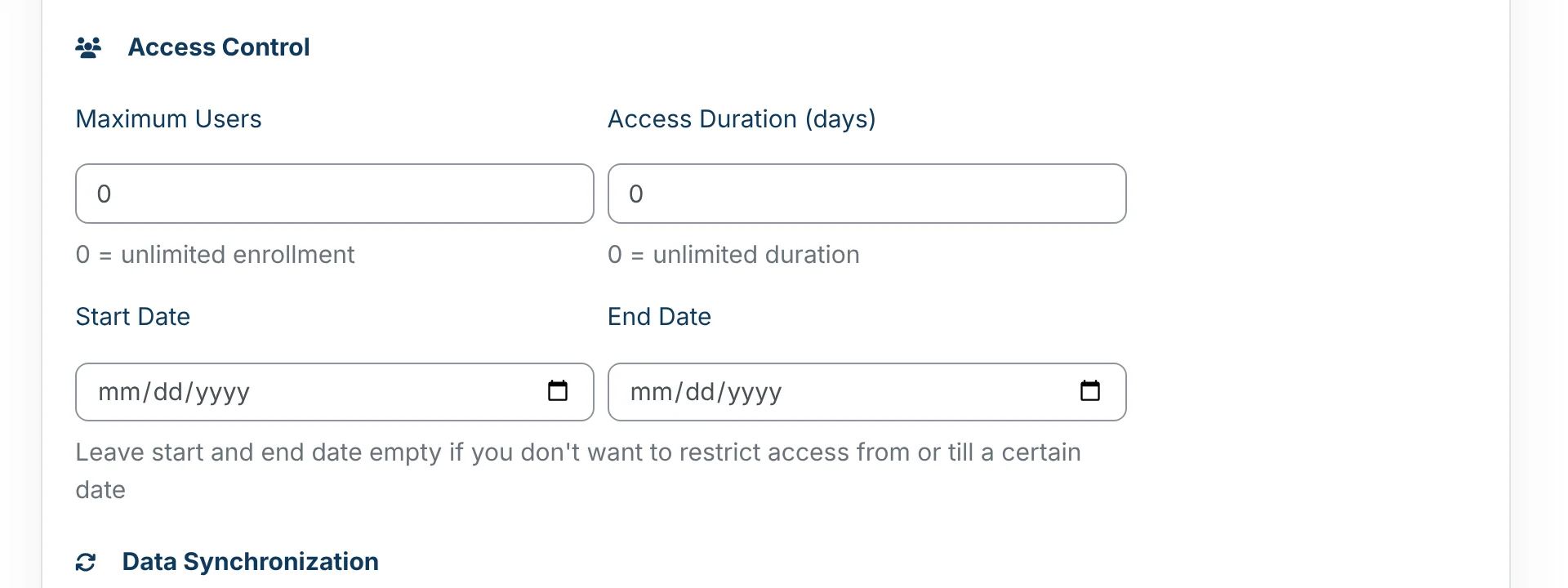
| Enrolment duration | How long a learner keeps access after registering for the first time. Enter a number and a unit, and tick Enable. Without it, access doesn’t expire. On the create form this is Access Duration (days). |
| Start date and End date | The period in which learners can open the tool. Tick Enable to use a date. Both are optional. |
Users and roles
| Setting | What it does |
|---|---|
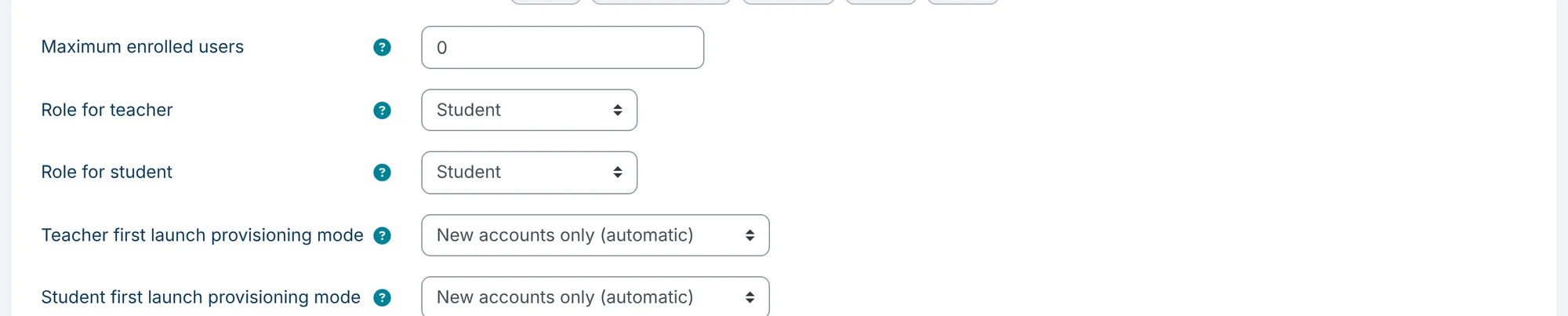
| Maximum enrolled users | The maximum number of learners that can register through this tool. 0 means unlimited. You can change the number at any time. On the create form this is Maximum Users. |
| Role for teacher and Role for student | The role a user gets in Linqur. Linqur only supports the Student role, so leave both on the default. |
| Teacher and Student first launch provisioning mode | How Linqur handles a user’s account on the first launch. Leave this on the default, New accounts only (automatic). |
Remote system
| Setting | What it does |
|---|---|
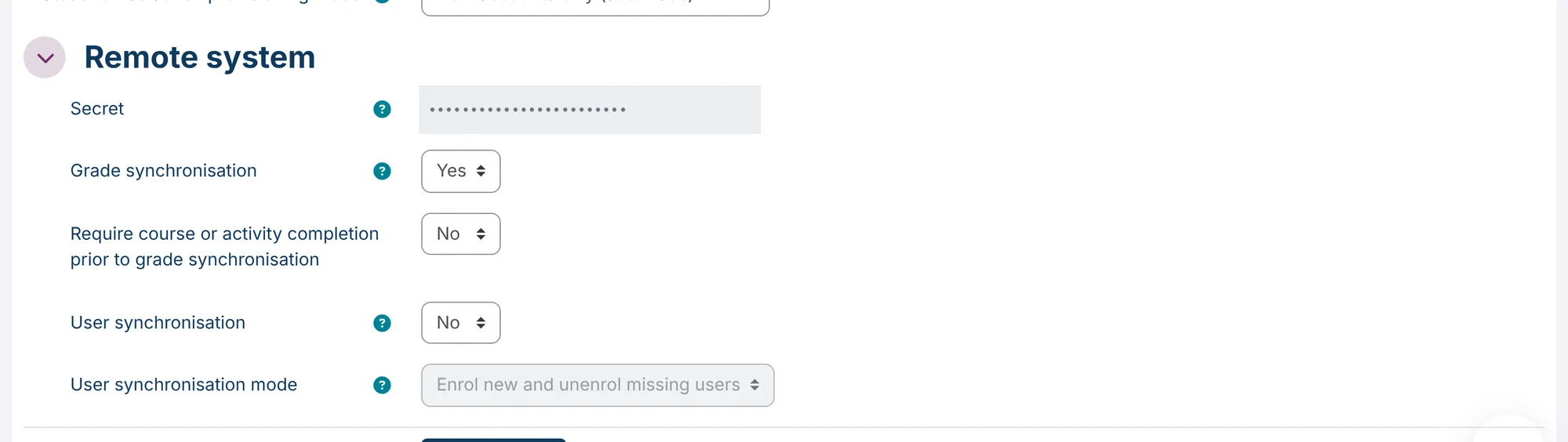
| Secret | The key the LMS uses to authorise the launch. Linqur generates it, but you can change it. You can use the same secret for more than one tool. If you change it, your client has to update it in their LMS. Only used for LTI 1.1/2.0 tools. |
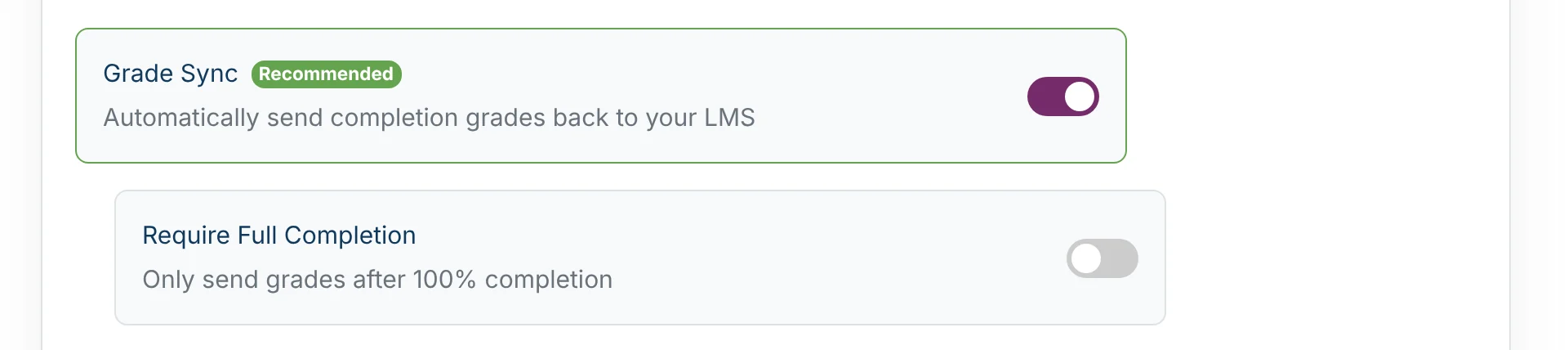
| Grade synchronisation | Whether the LMS receives the grade from the learning object. On by default. On the create form this is Grade Sync. The grades per learner are in the Gradebook of the course: see view grades in the Gradebook. |
| Require course or activity completion prior to grade synchronisation | When set to Yes, the grade is only sent once the learning object is complete. On the create form this is Require Full Completion. |
| User synchronisation | Whether a scheduled task enrols and unenrols users based on the LMS. Only LMS platforms that support this can use it. On the create form this is Member Sync. |
| User synchronisation mode | What the task does: enrol new and unenrol missing users, only enrol new users, or only unenrol missing users. |
After a learner is unenrolled through user synchronisation, their results are no longer available in Linqur.
User default values
This section is collapsed by default. It holds the default profile values for new users, such as the e-mail visibility, city, country, timezone and preferred language. Leave them on the default.
Access control and data synchronisation on the create form
When you create a tool, the same settings sit under Advanced Settings, grouped as Access Control and Data Synchronization.
Related
- The launch URL and secret are on the tool details page: share the launch details of an LTI tool.
- Terms such as LTI version, secret and consumer are defined in the LTI terminology overview.
- If a setting is saved but the LMS still refuses to launch the tool, start with the list of LTI errors and their solutions.
Last updated on